



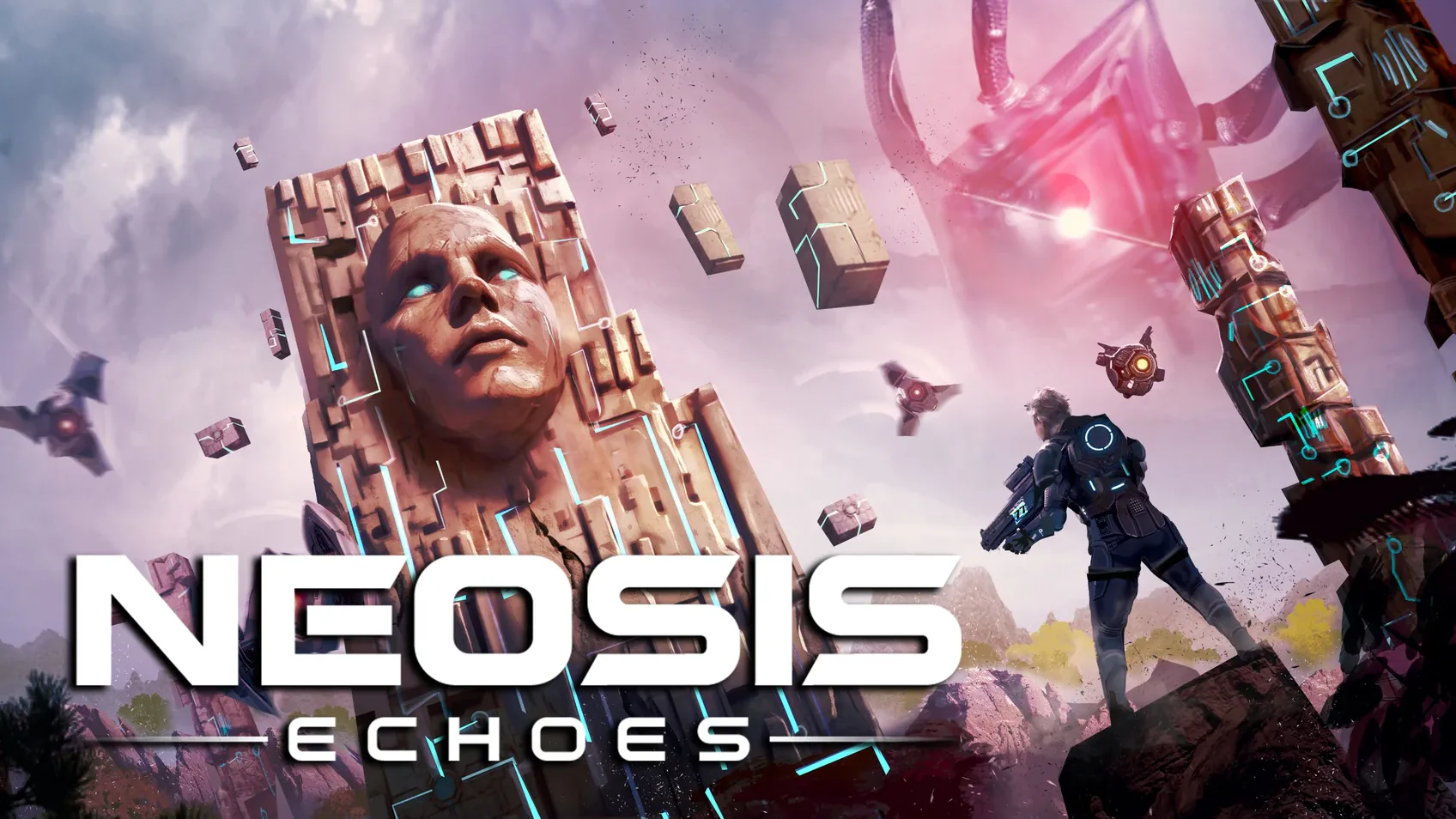


In Neosis Echoes, a bad mood is not simply a problem to fix as quickly as possible. It could provide you with access to different materials or help you lure an enemy into a trap. In an interview with Guided, the team at Vectaris Interactive explains how emotions could become part of your survival strategy.
Boris, Co-Founder and Game Director at Vectaris Interactive, answered seven of Guided’s questions in an interview. He explains how the systems fit together and what is already playable in the current pre-alpha.
Key Takeaways
- Positive, neutral, and negative emotions are intended to offer different advantages and drawbacks, including when gathering materials and crafting.
- According to the developer, your base also helps you prepare Evan’s emotional state for the next expedition.
- Neosis Echoes is in pre-alpha. The three-person team is targeting Early Access in 2027 and hopes for a demo in spring or around the middle of the year. Neither has a firm date.
What Is Neosis Echoes?
Neosis Echoes is an open-world survival-crafting game with a sci-fi cyberpunk setting. You explore the alien planet Varos from a third-person perspective. The Unreal Engine 5 project is being developed by Vectaris Interactive, a three-person indie team based in Strasbourg, France.
You play Evan Draxell, who wakes on Varos without his memories. Alongside the robot K.I.T., you explore alien landscapes and ruins, gather materials, and craft weapons and equipment. Your base and workshops provide a starting point for further expeditions. Combat pits you against hostile creatures and machines, while main missions uncover Evan’s past and the mystery surrounding the artificial intelligence Monolith.
Player Count and Platform: Neosis Echoes is currently designed as a single-player experience for PC via Steam, with K.I.T. as your AI-controlled companion. The team plans to develop co-op after the demo or during Early Access, but has not specified a group size.
Alongside gathering, building, and fighting, you manage nutrition, hydration, and stress. The distinctive idea is Reactive Survival: Evan’s emotional state is intended to affect his abilities, the environment, and the resources available to him. Boris explains how those systems are meant to work in the interview sections below.
The official gameplay trailer offers a first look at exploration, combat, and base building:
Why a Bad Mood Could Help You Survive
Boris describes the Emotional Loop as an interaction between Evan and the environment. Negative emotions can, for example, bring rain that slows or damages certain enemies. Alien cacti also react to those emotions, creating opportunities to lure enemies into environmental traps. Wildlife can become more or less aggressive depending on Evan’s emotional state.
That does not mean every poor decision reliably summons a storm. The interesting part is the intended trade-off: an unpleasant state can create danger while opening opportunities that would not be available to a more emotionally balanced Evan.
“Every state has its own advantages, drawbacks and strategic possibilities, encouraging experimentation rather than treating positive emotions as success and negative ones as failure.”
Boris, Co-Founder & Game Director
One detail takes that idea beyond access to different combat abilities. Certain resources yield different materials or items depending on whether Evan is in a positive, neutral or negative state. Some recipes require ingredients obtained in a particular state. Preparing to craft a specific item could therefore also mean planning your emotional condition before gathering its materials.
You Can Influence Your Mood, but There Is a Cost
The team describes Evan as a synthetic being. Nutrition, hydration, and stress nevertheless form part of his survival routine. Your actions and playstyle influence his emotions, while winning fights and visiting meditation spots or nightclubs can help him recover emotionally, according to Boris.
Temporary consumables offer a more deliberate intervention. Players can use them to maintain a chosen state for combat or dialogue, but they come with costs, cooldowns, and side effects. A pill that induces euphoria leaves Evan in a negative state afterwards. One that induces a negative state returns him to neutral when its effects end.
Asked how the team intends to prevent a frustrating spiral of stress, harder encounters, and a more hostile environment, Boris points to those consumables and character progression. Players should gradually acquire implants that help regulate stress and emotions. Whether those tools produce a fair balance will depend on the playable result, but recovery and intervention are part of the design.
Your Base Helps Prepare Your Next Emotional State
An expedition starts at your base. Outside, you gather resources, fight enemies, and progress through the story while managing nutrition, hydration, and stress. You then return with the materials needed to make new items at your crafting workshops.
The connection to emotional resource gathering gives this familiar routine an extra consideration. If a recipe needs materials obtained in a specific state, preparing for that state becomes part of the trip. Emotional reset areas at the base are intended to help players manage Evan’s emotions and potentially choose a state before leaving again.
According to Boris, this would make emotional preparation part of your strategy for the next trip. It does not yet establish how extensive the final construction options will be. The foundations of base building are in place, with further development among the team’s upcoming priorities.
K.I.T. Changes Tactics Alongside You
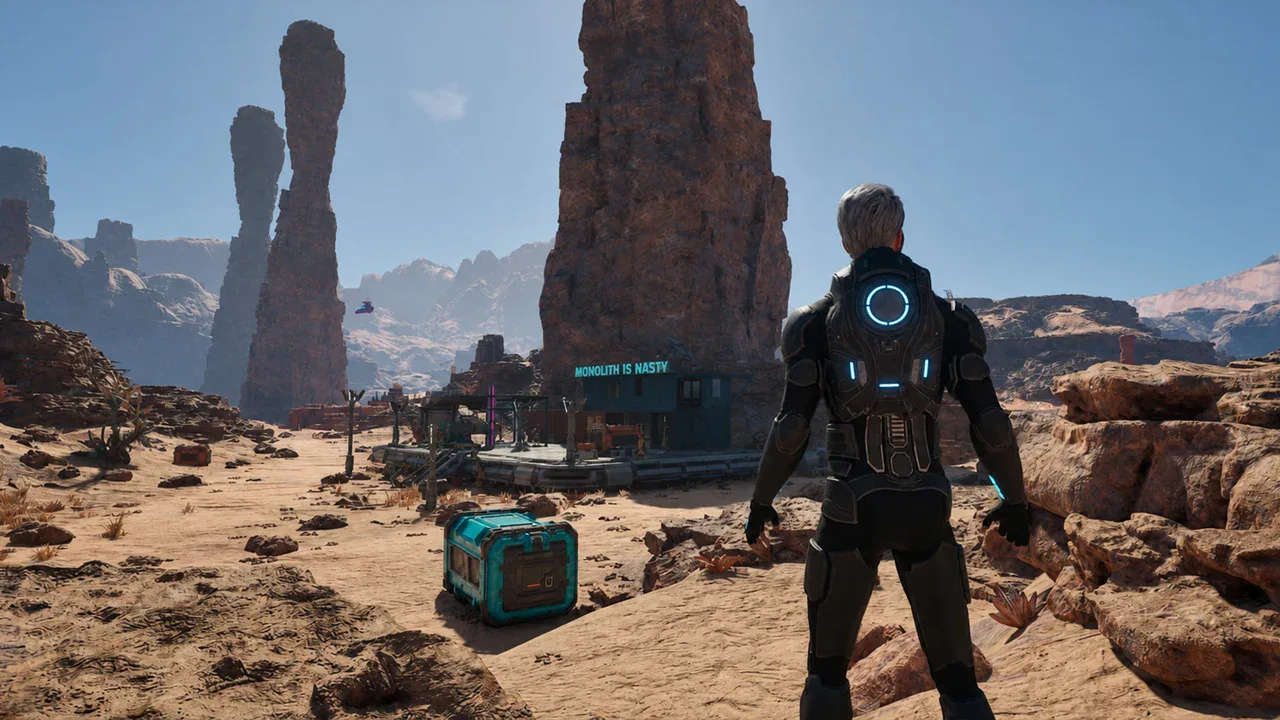
Your robotic companion K.I.T. supports resource gathering and combat while also playing a role in the story. Players can send him to a location, tell him to hold position or direct him to fire at a designated area. His abilities can be upgraded as the game progresses.
Evan’s emotions affect that support. In a neutral state, K.I.T.’s attacks remain balanced. A positive state makes him more defensive: he attacks less often but provides benefits such as health or shield recovery. Boris describes a different trade-off for the negative state:
“When Evan is in a negative state, K.I.T. becomes more aggressive and attacks more frequently, but is also more likely to enter Overdrive, so every emotional state comes with its own advantages and trade-offs.”
Boris, Co-Founder & Game Director
The answer does not explain exactly what Overdrive entails. The companion is intended to offer different strengths depending on Evan’s condition, rather than simply becoming better or worse.
Exploration Is Open, but New Technology Depends on the Story
Evan wakes on Varos without his memories. Recovering memory fragments and uncovering the mystery surrounding Monolith take place through the main missions. Players are meant to have considerable freedom to explore and build, although technological progression remains connected to the story.
Main missions provide blueprints that expand the technology tree, according to Boris. Unlocking and upgrading those blueprints creates further building and crafting possibilities while developing Evan’s combat capabilities. Players who focus on their base will therefore eventually need to return to the main missions to gain additional construction options.
What Is Playable in Pre-Alpha, and What Comes Next?
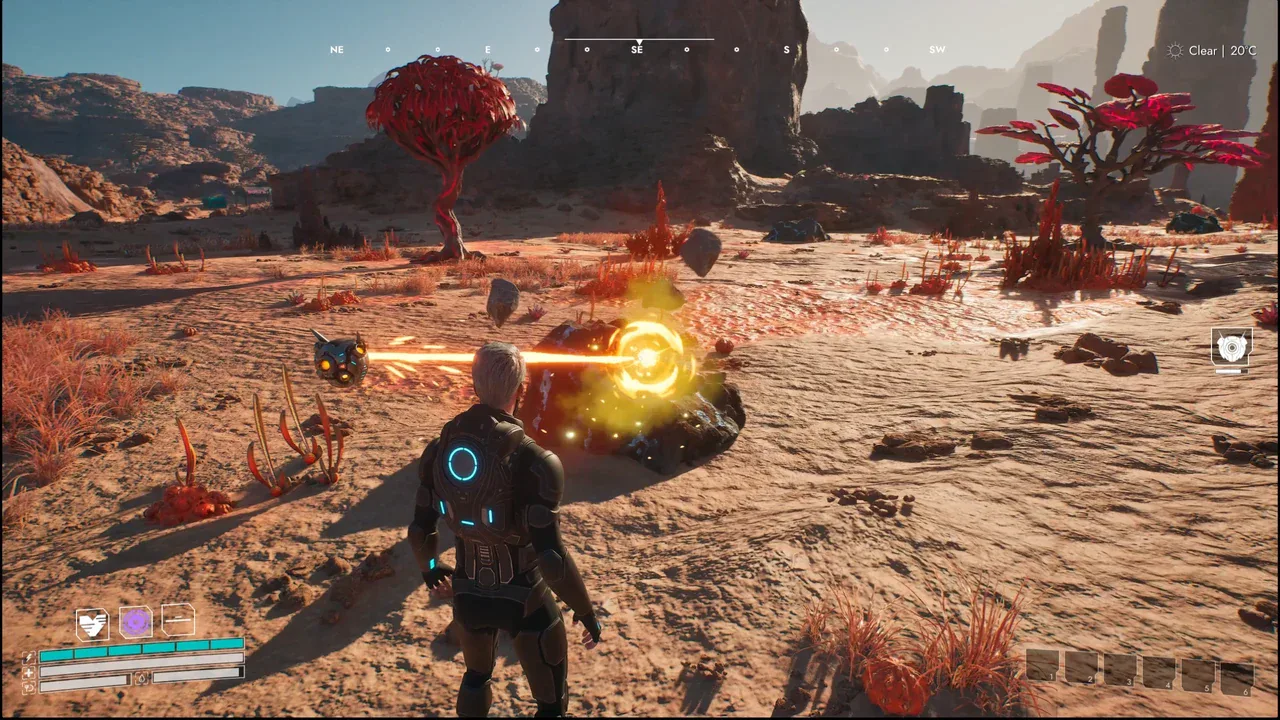
Vectaris Interactive is a three-person team based in Strasbourg, France. Built in Unreal Engine 5, Neosis Echoes is still an early project. Boris stresses that its scope is being tailored to the team’s size. Combat is already playable; the foundations of base building, missions, weather, and technological artifacts are in place, and much of the emotional system has been implemented.
That is a specific developer account of the current build, rather than proof of a finished and fully balanced survival game. After the reveal, priorities include developing the demo’s missions and expanding base building. The team also plans an in-game lore reference and an inspection system for finding and collecting logs. Completing the demo’s music and sound design is another major priority.
Early Access and a Demo Are Targeted for 2027
Boris remains cautious about the release schedule:
“We’re aiming for Early Access in 2027, although it’s unlikely to be early in the year and we can’t confirm a precise date yet.”
Boris, Co-Founder & Game Director
The demo does not have a firm date either. The team hopes to release it in spring or around the middle of 2027.
How playtests will be organized remains undecided. The team may begin with a small group of people it knows and gradually extend access to other trusted testers. Boris also says the team would be happy to send Guided a press build once one is ready. By then at the latest, you’ll hear from us whether Neosis Echoes has what it takes to establish itself in the survival genre.
Neosis Echoes is currently being developed for PC. Its Steam page lists single-player and English language support, with no release date yet. For now, the project’s appeal rests on the concrete idea behind its Emotional Loop: a bad mood may sometimes be the condition you need for your next plan.
0 comments
No comments yet. Start the discussion.
Create an account to comment
Sign in or create a free Guided account to join the discussion.