



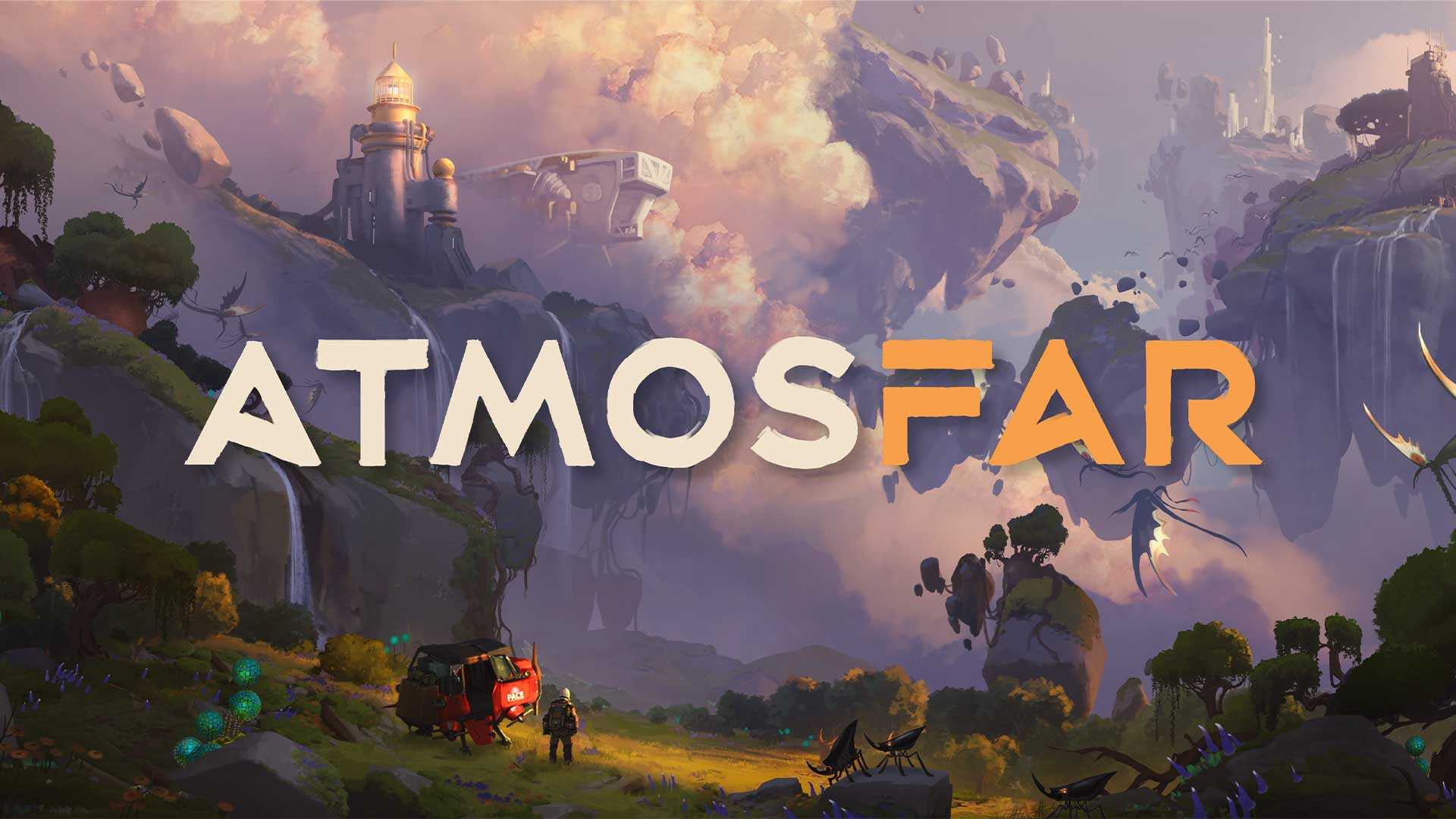


Survival games now come in just about every imaginable form. Gathering resources, crafting, improving your gear, and building up your own infrastructure are almost always part of the formula. ATMOSFAR follows many of those familiar foundations as well, but it stands apart through its world and, above all, the way you move through it: Instead of crossing one huge landmass on foot, you fly between floating islands on a massive gas planet.
At Gamescom 2026, I got to try an up-to-date alpha build, or rather demo, of ATMOSFAR in single-player and also had the chance to speak with the developers at Apog Labs. It quickly became clear to me that flying could become one of the game’s biggest strengths. At the same time, ATMOSFAR is planned to launch with both single-player and co-op for up to four players, although I did not get to try the co-op mode myself at the show.
ATMOSFAR Focuses More on Scrap and Technology Than Chopping Down Trees
At its core, ATMOSFAR initially follows familiar survival-game territory. You explore your surroundings, gather resources, craft new items, and gradually improve both your equipment and your technological capabilities. However, you are not simply running through forests with an axe and cutting down one tree after another.
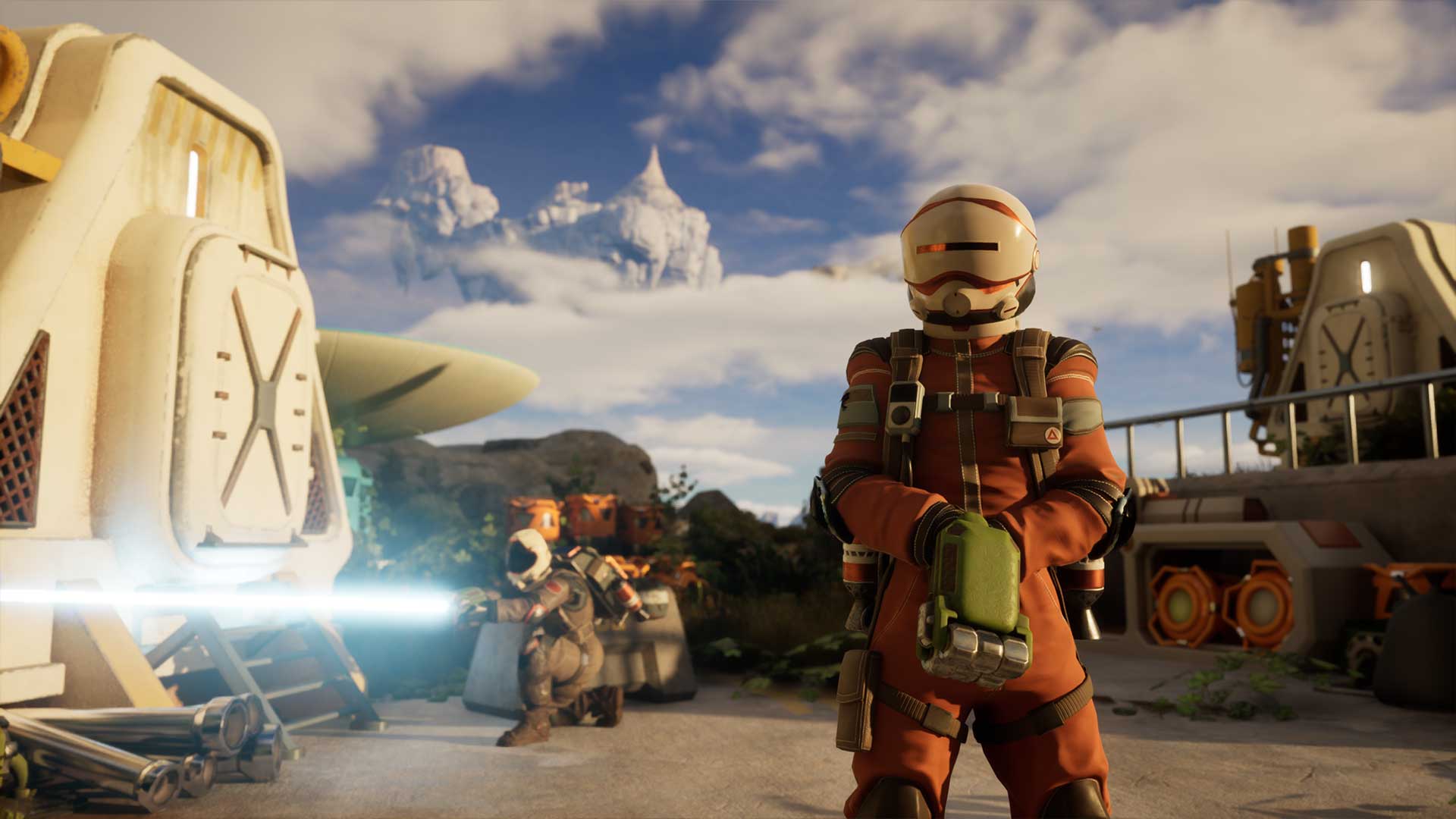
Instead, you find plenty of scrap, old machinery, and other technological remains across the floating islands, which you can break down using the appropriate tools. With your mining laser, you extract materials that can then be processed at workbenches. This means the familiar loop of exploration, gathering, crafting, and upgrading remains intact, but the science-fiction setting gives it a somewhat different feel.
ATMOSFAR takes place on the gas planet Tycos. Traversable areas are located on large floating islands, some of which feature enormous differences in altitude. As a result, your aircraft is not simply a faster way of getting around, but a central part of the entire exploration experience.
The Flight Controls Were the Highlight of the Demo for Me
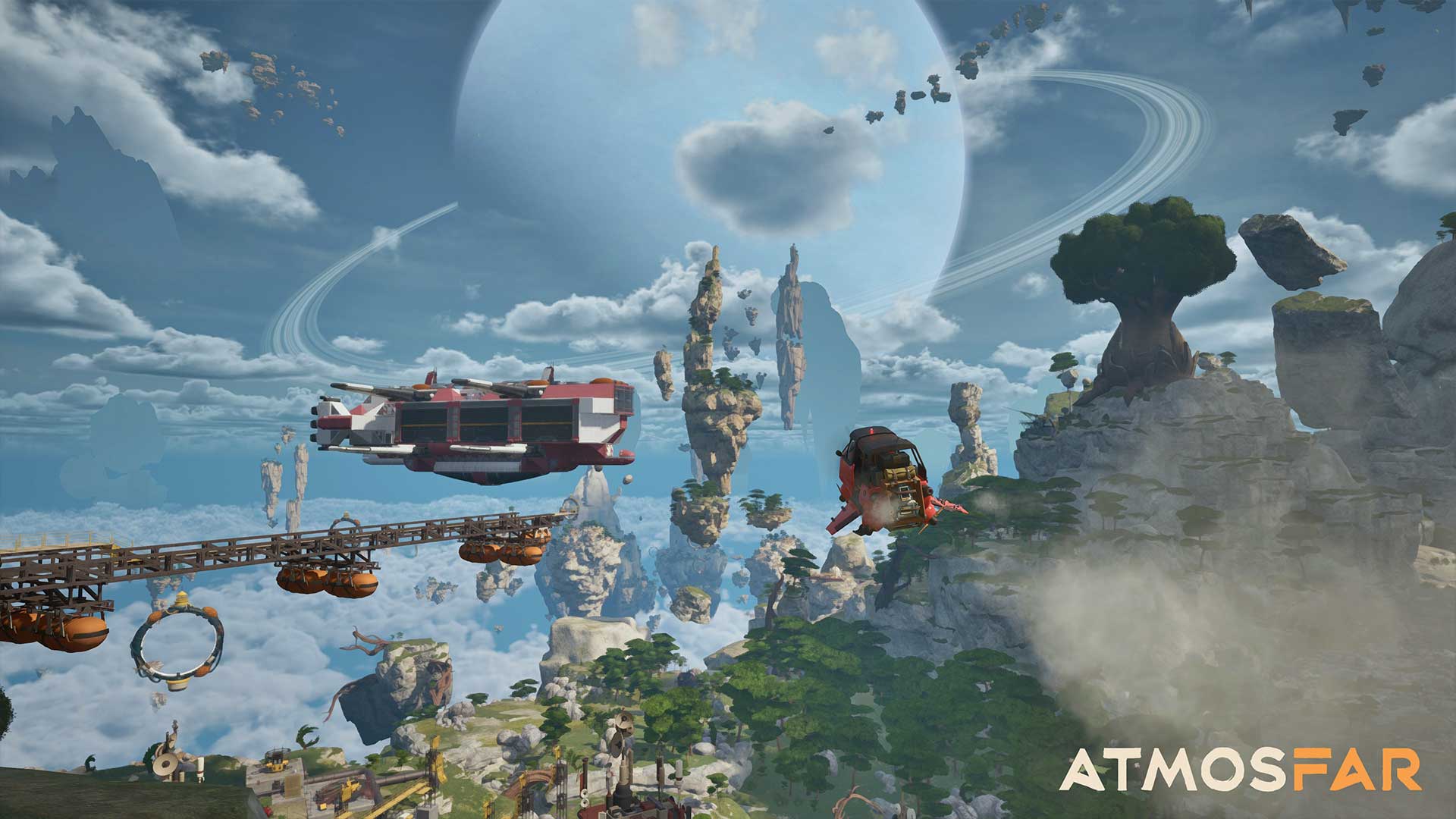
Fairly early on, you gain access to a small aircraft that sits somewhere between a spaceship and a helicopter. The so-called Wasps can fly normally through the air, but they can also hover in place, allowing you to approach islands and resource deposits with much greater precision.
I played ATMOSFAR with a controller and was impressed by the controls pretty quickly. Even the small and comparatively slow starter vehicle felt pleasant to handle. Flying itself did not feel like an annoying stretch of travel between two interesting locations, but was already enjoyable on its own.
I also got a sense of just how large some of the distances can be during my demo. One island I wanted to reach was located at an altitude of around 14,000 meters. With my little tuk-tuk-style spacecraft, it naturally took quite a while to get there. At the same time, it gave me a good impression of just how vertical and expansive the world can be.
You cannot simply keep flying downward forever, either. Tycos is a gas planet, and the deeper you go, the greater the atmospheric pressure becomes until your character eventually dies. Weather conditions such as strong winds, jet streams, rain, and storms are also intended to affect how you move through the world.
In Co-Op, Multiple Players Can Use the Same Aircraft
Although I only played the single-player mode at Gamescom, I was able to talk to the developers in more detail about the planned co-op. ATMOSFAR is designed to be playable both solo and with up to four players. Apparently, not every player will necessarily need their own aircraft.
The small aircraft from my demo, for example, can carry two additional players besides the pilot. While one person flies, the two passengers are still supposed to be able to use their tools. That means one player could slowly steer the ship past a resource deposit while two others mine materials directly from the aircraft with their mining lasers.
I find this system particularly interesting because co-op would then mean more than simply having several players occupy the same world. Tasks can actually be divided up. One player handles the aircraft, while others gather resources or later take care of different jobs.
How well this works in practice is something I cannot judge based on my Gamescom appointment yet. I did not get to test the multiplayer myself, so my assessment of the co-op is currently based entirely on what the developers explained to me and on the underlying concept.
Co-Op Progress Is Currently Tied to the Host
According to the developers, ATMOSFAR currently uses traditional host-based sessions for multiplayer. There are no persistent dedicated servers on which your shared world continues to exist independently of a specific player.
Instead, one of you opens the world and invites the others. The entire world progression is saved by the host. This means your shared session depends on that player starting the world whenever you want to continue playing.
Guest players also cannot currently take their character or progression from the host’s world and simply continue using it in their own world afterward. If you plan to play ATMOSFAR with a fixed group, you should therefore decide early on who will consistently act as the host.
Whether this system will be expanded during Early Access remains unclear. At launch, you should therefore think of ATMOSFAR’s co-op more like a traditionally hosted shared survival world.
Different Aircraft and a Massive Cloud Cruiser
The small starter aircraft is only the beginning. As you progress, you can find, repair, and upgrade additional Wasps. Different variants are designed for different tasks, while individual components can also be modified or improved.
You also have to keep an eye on more than just damage. Fuel matters as well, especially when traveling across large distances between islands. Later vehicles are intended to be faster and more capable than the small aircraft I used during the demo.
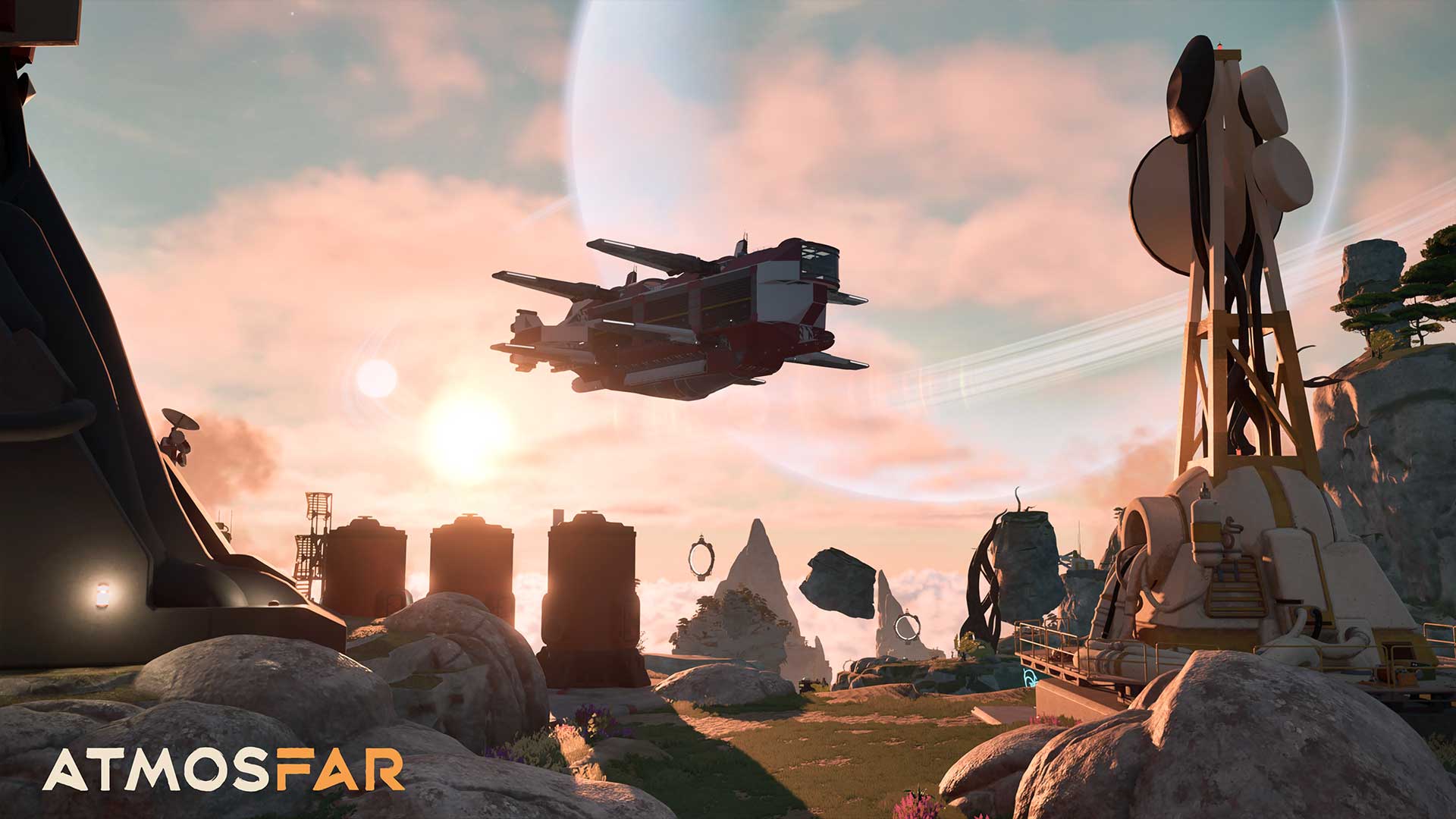
One of the largest vehicles is the so-called Cloud Cruiser. This is a massive airship that also serves as a mobile base and can cover significantly greater distances. You can even carry a smaller aircraft with you and use the Cruiser as a starting point for expeditions.
That changes the classic base-building formula to some extent. Instead of permanently building your entire infrastructure in a single location, you can eventually take an important part of it with you. For a survival game built around widely separated floating islands, that concept fits the world extremely well.
Your Bases Are More Like Functional Outposts at First
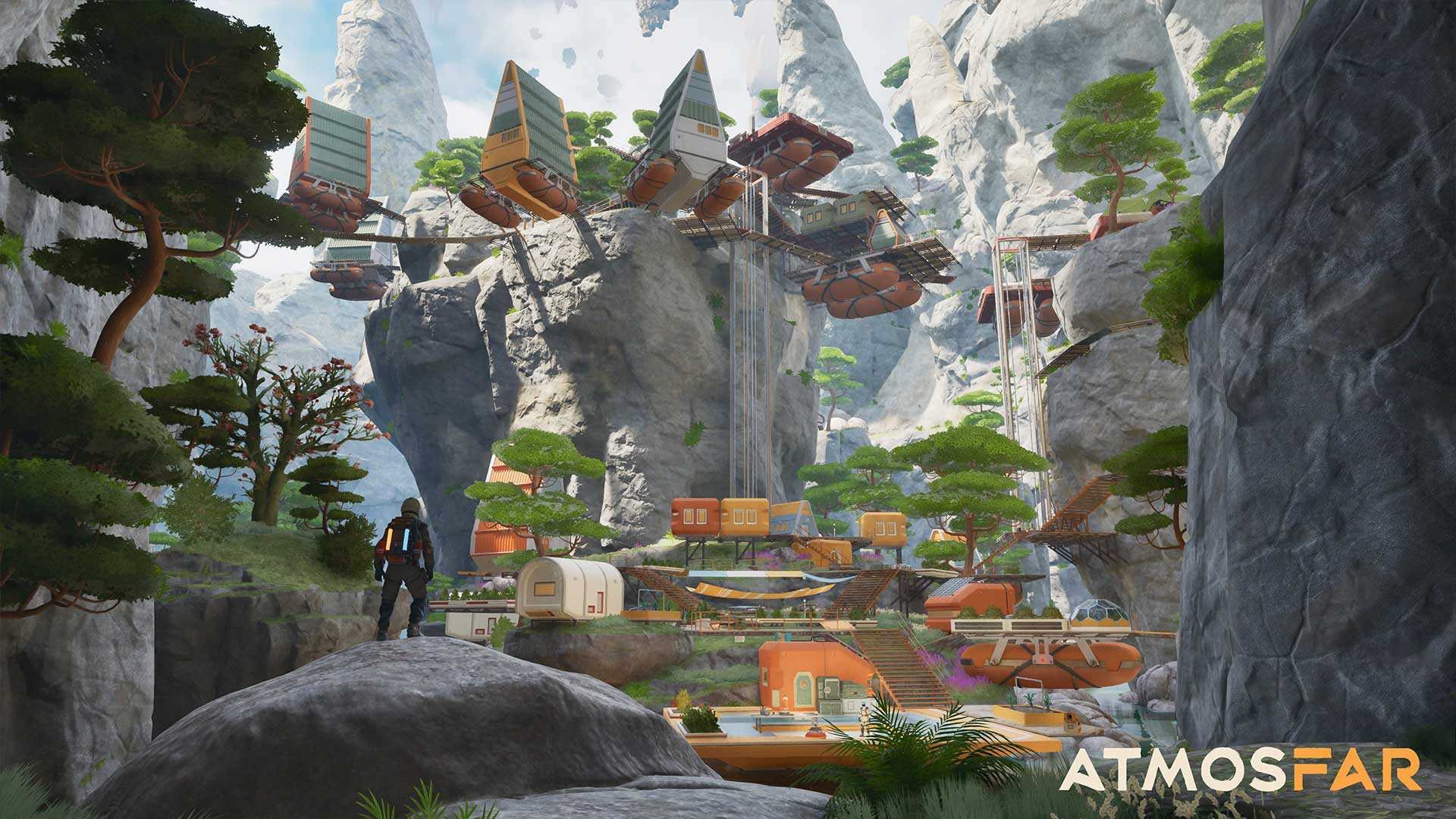
Fixed structures still play a role in ATMOSFAR, although my demo did not feature traditional base building with freely constructed houses. Instead, I could place a signal tower that acts as the starting point for a small outpost.
Around this tower, you can place workbenches and other facilities to process resources directly on-site. These feel more like functional stations than large decorative homes of the kind you may know from other survival games.
Larger production facilities are planned for later. The developers explained to me, for example, that you will be able to feed larger chunks of ore into dedicated machines or buildings. These will process them faster and more efficiently, giving you a better yield than manually mining and breaking everything down yourself.
That should also change the progression over time. Early on, you perform many individual steps yourself, while later you increasingly build infrastructure that handles certain processes more quickly and efficiently.
Around Seven Large Islands Are Planned for Early Access
According to the developers at Gamescom, ATMOSFAR is expected to offer around seven larger floating islands when Early Access begins. Steam describes the scope more broadly in terms of several regions and different biomes that are planned to expand over time.
How much playtime these areas will actually provide is impossible to judge after my short demo. My first impression, however, is that there should at least be enough to explore and build for several hours. Personally, I would currently expect a decent double-digit number of hours before the question of long-term motivation really becomes important.
That is exactly what will be crucial for ATMOSFAR. Flying already works quite well, and the basic framework of a survival game is clearly there. But if you are still supposed to enjoy moving between these islands after 20, 30, or even more hours, the game will need enough varied activities, upgrades, and worthwhile goals.
When Does ATMOSFAR Enter Early Access?
ATMOSFAR was originally supposed to enter Early Access on May 20, 2026. Shortly before that date, however, the release was delayed so the developers could spend additional time polishing the game and working on its growing scope.
A new specific release date has not yet been announced. ATMOSFAR is currently listed simply as “Coming Soon” on Steam. During my Gamescom conversation, the developers were also unable to give me an exact date, but they still plan to launch the Early Access version in 2026.
The game is initially planned for PC and is set to be available on both Steam and the Epic Games Store. You can play ATMOSFAR entirely on your own or enter the planned online co-op with up to three other players.
My Impression After the Gamescom Demo
ATMOSFAR does not reinvent the survival genre. Gathering resources, crafting, better tools, and increasingly efficient infrastructure are mechanics you have probably already seen in plenty of other games. However, the floating islands and especially the aircraft give it a direction of its own.
For me, the flight mechanics were easily the biggest strength of the Gamescom demo. Even the small and slow starter vehicle was fun to control, which made me genuinely interested in trying faster aircraft and especially the Cloud Cruiser later on. If the developers can combine that strong foundation with interesting islands and enough varied activities, ATMOSFAR could stand out from the crowd of survival games.
The planned co-op also sounds promising on paper, particularly because several players can use the same aircraft while taking on different tasks. How well that actually works is something I will still need to try for myself. At Gamescom, I only played the single-player mode.
The biggest open question for me is therefore not the flying, but the long-term content. I can already imagine having several entertaining hours with ATMOSFAR. Whether the gas planet still gives you enough reasons to take off again after dozens of expeditions will become clear once Early Access begins.
0 comments
No comments yet. Start the discussion.
Create an account to comment
Sign in or create a free Guided account to join the discussion.