





Guild Wars 3 appears to be going with clearer group roles while still offering a lot of freedom within individual builds. ArenaNet is also taking a more structured approach to group sizes and larger PvE encounters than it did in the previous game.
It is becoming increasingly clear how ArenaNet wants Guild Wars 3 to stand apart from its predecessor. While fans are already speculating about a secret fourth playable species and the developers have taken a closer look at Humans, Asura, and Kodan, the class system is now revealing new details as well. Even if some veterans may not like them.
IMPORTANT UPDATE: A huge apology from our side to the fans, who were eagerly waiting for new information! Due to a communication error on our end, we misinterpreted the classes that are in the game at launch! We updated the article now, and everything should be correct!
Looking for mates and friends? Join our Guild Wars community on Facebook!
These 3 Classes Are Confirmed for Guild Wars 3 So Far – But There’s Much More to Them
So far, three playable classes have been confirmed for Guild Wars 3, but your gear, skills, and specializations are meant to determine which role you actually fill within a group. More classes are expected to follow, although ArenaNet has not yet confirmed how many will be available at launch.
ArenaNet officially announced Guild Wars 3 in June and has been revealing more and more details about the MMORPG ever since. After the playable species and their connection to Orr, classes and group play are now moving further into focus.
These Are the Three Guild Wars 3 Classes We Know So Far
- Ranger
- Warrior
- Necromancer
ArenaNet wants to give players plenty of freedom within each individual class. We asked the developers directly what that variety could look like, and they gave us an example using the Necromancer.
The Necromancer already shows just how far this approach could go. According to additional information from a direct conversation with the developers, there are currently around eight distinct, viable builds. These include a minion-focused build as well as a variant built heavily around life steal.
Whether all eight builds will make it into the final game unchanged remains unclear. The number already shows, however, that the classes are apparently intended to offer much more variety than the three currently known options might initially suggest.
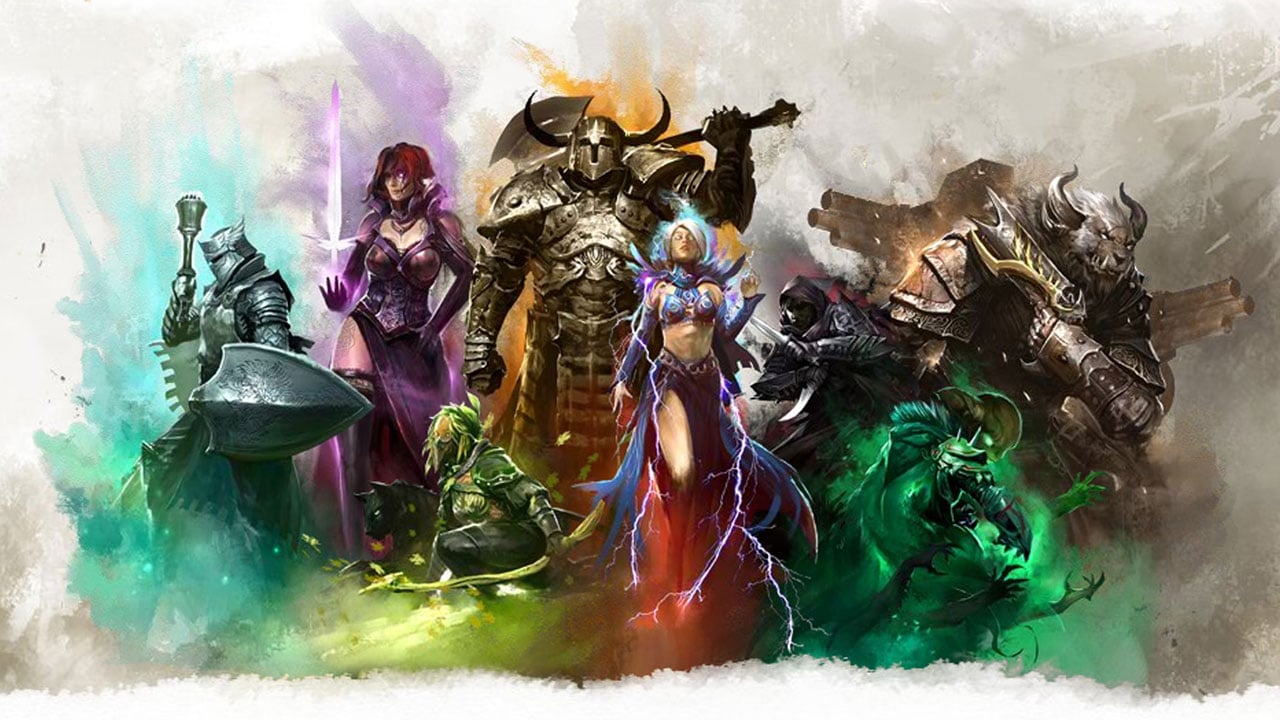
Guild Wars 3 Brings Back the Holy Trinity With Tanks, Healers, and Damage Dealers
For group play, Guild Wars 3 is moving closer to the classic “Holy Trinity” with three fundamental roles:
- Tank
- Healer
- Damage Dealer
A class will not be permanently locked into a single role. What you do within a group depends on your equipment, chosen abilities, skill setup, and overall build.
Classes are therefore expected to support more defensive, offensive, or supportive playstyles depending on the setup. ArenaNet has not yet shown exactly which roles every individual class will be able to fill.
Guild Wars 3 therefore combines clearer group roles with the build freedom of its predecessor. Guild Wars 2 deliberately moved away from a fixed Holy Trinity and allowed every profession to handle several different tasks. In the sequel, these playstyles appear to be more clearly separated without locking you into a single role.
Guild Wars 3 Groups Have Five Players, With Larger Encounters Reaching Around 20
ArenaNet is also setting clear limits on group size. Regular parties are expected to support a maximum of five players, while larger combat encounters and group activities appear to be targeting around 20 players. ArenaNet has not explicitly confirmed traditional raids yet.
ArenaNet apparently wants to avoid making groups much larger because fights can become harder to read and individual players have less impact.
Large encounters are instead meant to remain easy to follow, with your own actions still playing a noticeable role. That could also make Guild Wars 3’s larger PvE content feel different from some of the massive battles in Guild Wars 2.

0 comments
No comments yet. Start the discussion.
Create an account to comment
Sign in or create a free Guided account to join the discussion.