



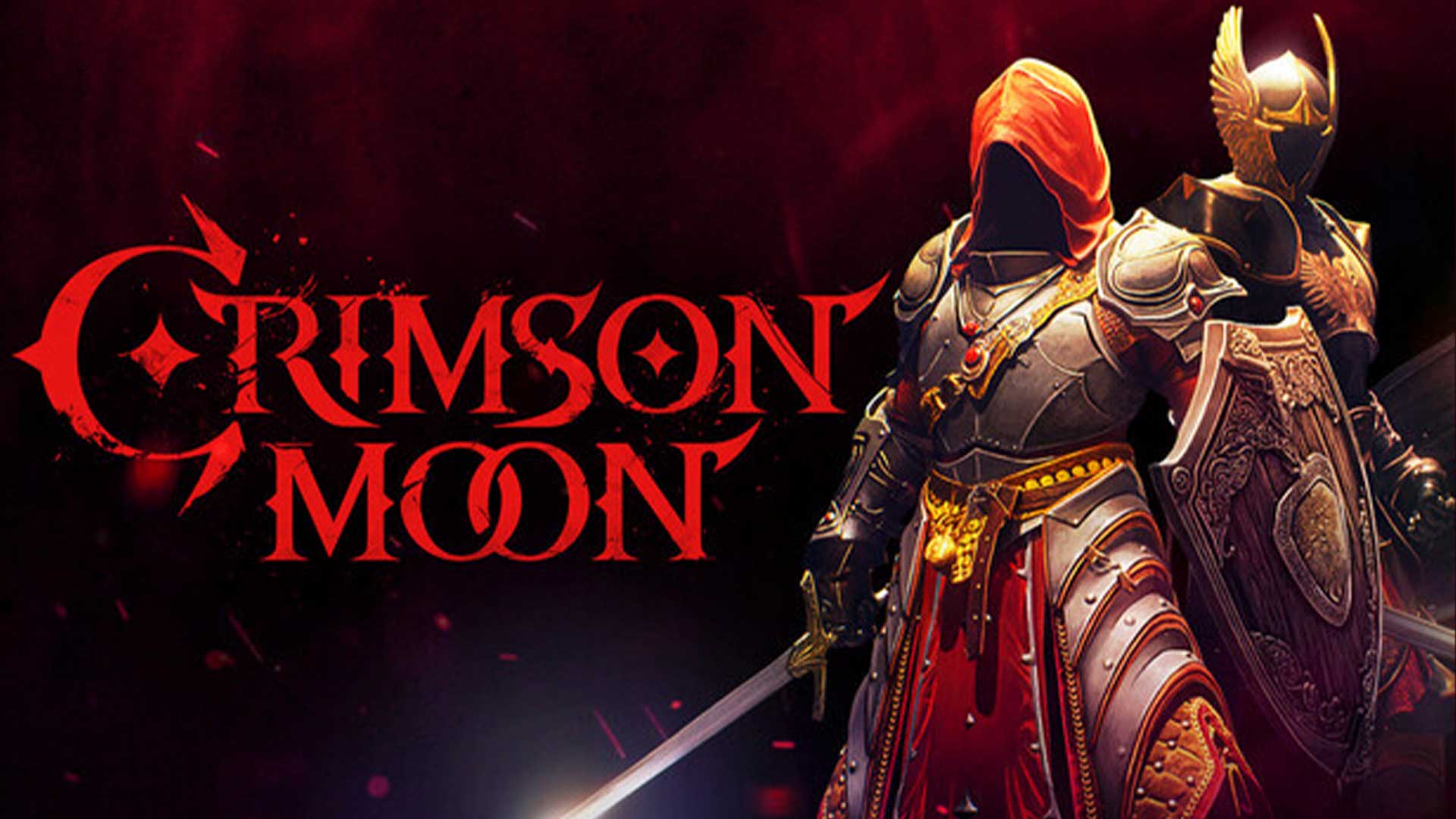


Crimson Moon launches today, September 1, 2026, bringing together Soulslike combat, two-player co-op, plenty of loot, and a wide range of different builds. At around $20, the barrier to entry is fairly low. But is this demon hunt actually worth your time?
I already had the chance to spend some time with Crimson Moon at Gamescom. Together with my mate and streamer Pillebrille, I played several missions in co-op, experimented with different weapons, and even put together a surprisingly fun Frost build.
My first impression is positive. Crimson Moon works remarkably well with two players, and even during our relatively short demo, the loot system constantly made me want to hunt for the next better weapon.
There is one major question my Gamescom session couldn’t answer, though: How long will it stay exciting?
For $20, You Get a Soulslike for One or Two Players
Crimson Moon is developed and published by ProbablyMonsters. You take on the role of a Nephilim, half human and half angel, fighting for the Order of the Crimson Moon.
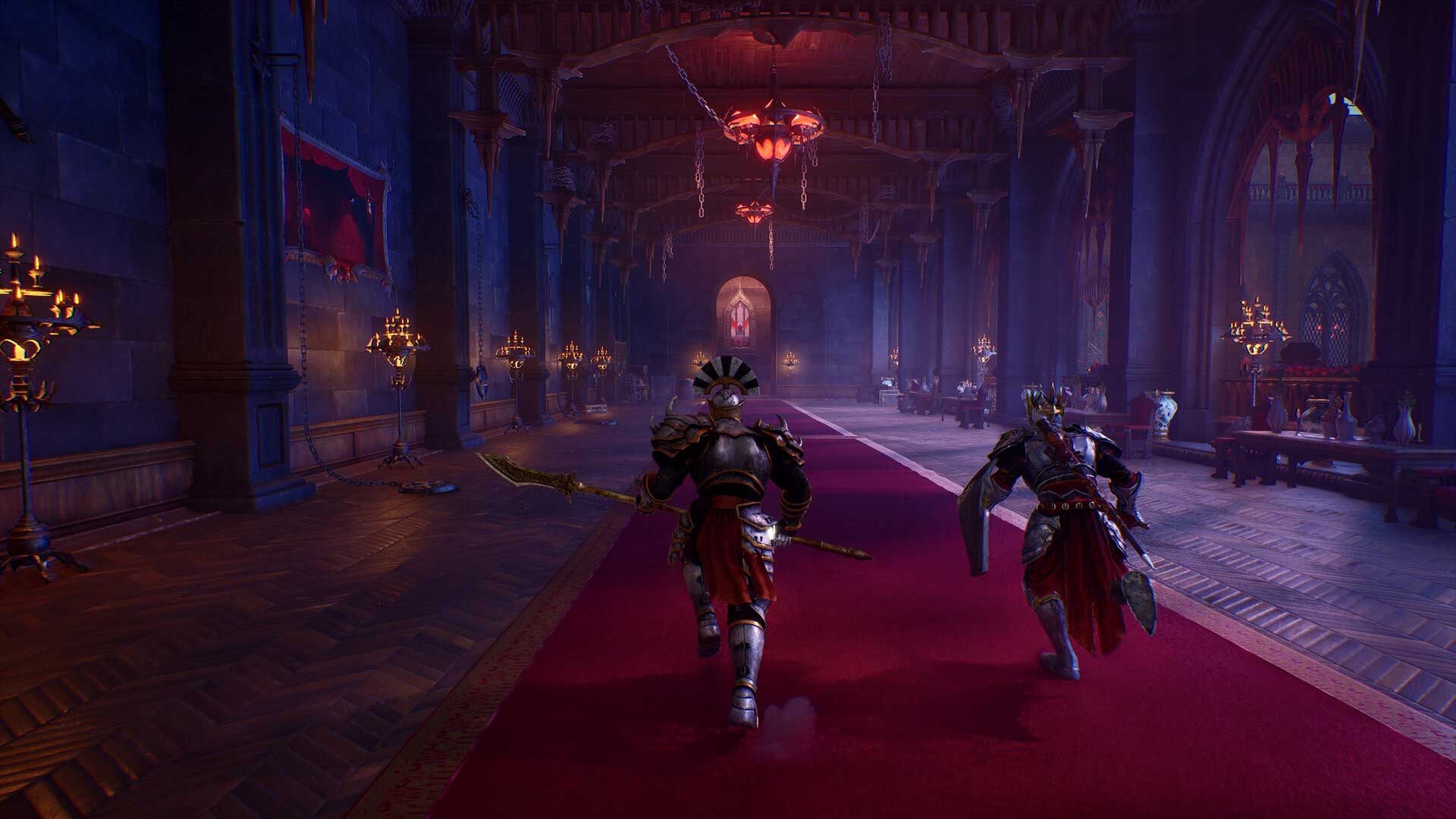
The once holy city of Gildenarch has been overrun by demons, undead, vampires, and other creatures. From your base, you set out on different hunts and attempt to reclaim the city’s districts.
You can play Crimson Moon entirely on your own or team up with one other player. Co-op was exactly how I played it at Gamescom.
The host selects the mission and difficulty level at the base before both players enter the mission through a portal.
From there, the basic loop is easy to understand: kill enemies, open chests, collect loot, somehow make it to the boss alive, and then beat the hell out of that one as well.
If you succeed, you return to your base with everything you’ve collected.
Our Introduction to Co-Op Was Pretty Rough
Because we wanted to play Crimson Moon in co-op at Gamescom, Pillebrille and I had to skip the actual tutorial.
That meant we were thrown straight into the deep end.
We had to figure out the controls, attacks, abilities, blocking, parrying, and equipment system while already making our way through the first run. As a result, our introduction was probably considerably more difficult than it would be under normal circumstances.
After a short adjustment period, however, the combat started to click surprisingly well.
Crimson Moon also adjusts its enemies based on the number of players. Bringing a friend doesn’t simply give you twice the manpower while leaving every enemy exactly as it was designed for solo play.
We could definitely feel that during the demo. Larger groups in particular could quickly become a problem, and blindly charging into several enemies at once was a pretty reliable way to end up on the floor.
Combat Offers Much More Than Just Button Mashing
At its core, Crimson Moon features many mechanics that should immediately feel familiar if you’ve played other Soulslikes.
You can perform light and heavy attacks, charge heavy attacks, dodge, block, and parry at the right moment. On top of that, you have special abilities that consume Mana.
You have access to two weapon sets. During my session, for example, I switched between a slow two-handed weapon and a much faster one-handed weapon paired with a shield.
That alone changes how you approach a fight.
With the two-handed weapon, I had to time my attacks much more carefully, but landing a hit could deal some serious damage. The one-handed weapon and shield made me faster and allowed for a much more defensive playstyle.
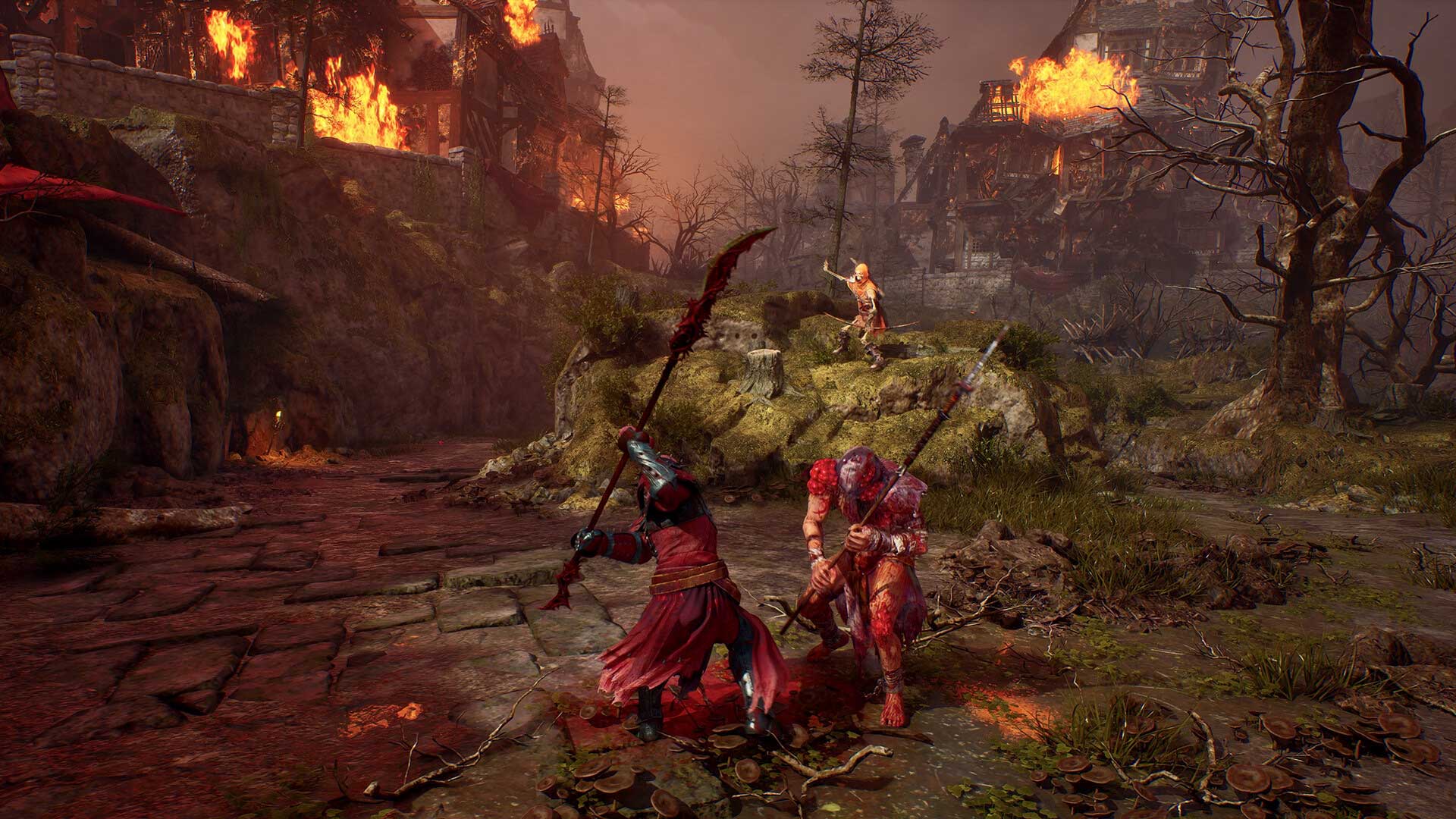
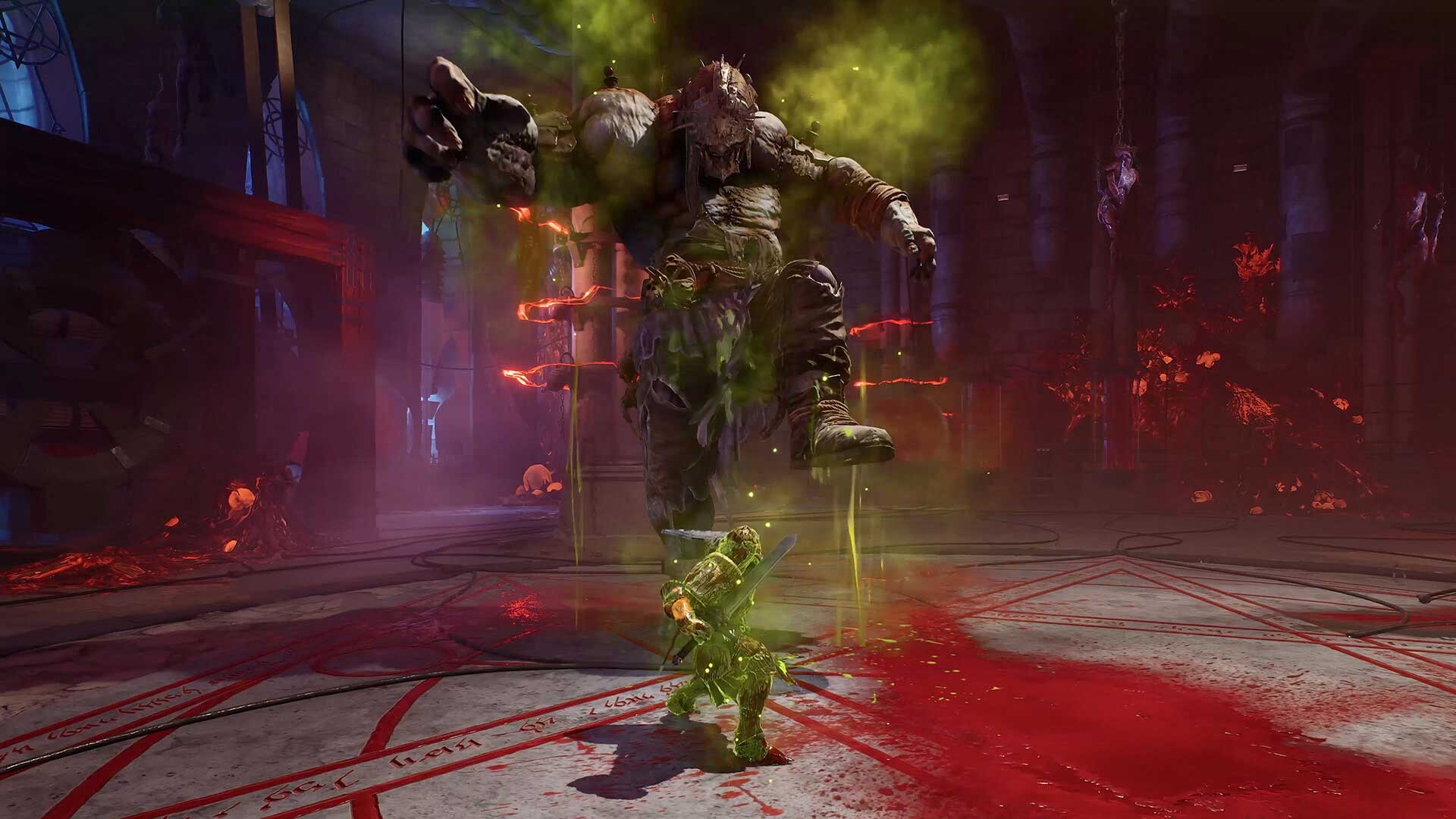
There are also different types of enemies to deal with. During our missions, we fought traditional melee enemies, archers, magic users, and tougher elite enemies.
Simply hammering the attack button wasn’t going to get us very far.
Parrying in particular can be extremely useful. Successfully blocking an attack at the right moment doesn’t just create an opportunity to counterattack. Depending on your equipment, it can trigger additional effects.
And that’s where Crimson Moon starts to get really interesting.
My Frost Build Was a Lot of Fun
Crimson Moon doesn’t have traditional character classes. Instead, your build is defined by your weapons, armor, jewelry, and the different properties attached to them.
Weapons can deal different types of physical and elemental damage. Equipment affects stats such as armor, resistances, and other attributes. Items can also come with special effects and abilities.
Even during our relatively short Gamescom session, this gave me an opportunity to start combining different pieces of equipment.
Eventually, I ended up with a small Frost build.
I found a Frost weapon with an ability that allowed me to perform a whirlwind attack. It could hit several enemies while simultaneously building up Frost.
Things became even more interesting thanks to an additional parry effect. Whenever I blocked an attack at the right moment, I applied 1,000 Frost to the enemy.
Different enemies have different thresholds for status effects. Regular enemies can therefore be frozen more quickly than tougher opponents. Once enough Frost has been accumulated, the enemy freezes completely.
And, unsurprisingly, a frozen enemy isn’t particularly good at objecting when you proceed to hit it with a very large weapon.
These combinations were one of the most enjoyable parts of the demo for me.
If you want to focus more heavily on abilities, you can equip your character with gear that provides additional Mana or improves Mana regeneration. Alternatively, you can focus more on regular attacks, defense, or specific elemental effects.
There are additional systems on top of that. Equipment can feature so-called Boons, while Nexus Gates found during missions allow you to choose temporary upgrades for your current run.
You also choose an Angel for your hunts, adding another element that can influence your build.
Together, these systems add an interesting layer to what initially appears to be a fairly traditional Soulslike combat system.
The Loot System Could Be the Real Star
At least as important as the combat is Crimson Moon’s hunt for better gear.
Enemies and chests can reward you with weapons, armor, jewelry, and other items. As your character level increases, better and rarer loot can become available as well.
Before every new mission, you can change your loadout.
The more successful runs you complete and the more equipment you find, the larger your arsenal becomes.
There is an important catch, though.
Finding an amazing weapon during a mission doesn’t automatically mean it’s permanently yours. First, you need to successfully complete the hunt and then secure, or “Purify,” the newly acquired equipment back at your base.
Only then does it become a permanent part of your collection.
This adds a welcome element of risk. If a particularly powerful weapon drops halfway through a difficult mission, you suddenly have a very good reason to make it back home alive.
If the run ends in complete failure before then, your new loot is gone.
Equipment you’ve already secured during previous successful runs isn’t permanently lost, however. If I’ve already brought an Epic weapon back from an earlier mission, I can use it again in future hunts without risking losing it forever when a run goes wrong.
As a result, Crimson Moon doesn’t feel like an extraction game where your entire loadout is constantly at stake. Newly discovered loot still creates some additional tension during a run.
In Co-Op, You Even Share Your Extra Lives
Crimson Moon also has an interesting approach to death in co-op.
If you go down, your teammate can attempt to revive you. Naturally, that’s easier said than done when several enemies are still trying to kill both of you.
Even if the revive fails, however, the mission isn’t necessarily over.
In co-op, both players share an additional pool of lives. As long as there are still enough reserves available, you can continue after dying.
That also means every mistake becomes the entire team’s problem.
If I decide to make five questionable decisions in a row and repeatedly let a demon turn me into minced meat, I’m not just wasting my own resources. I’m eating into our shared supply.
Only once that pool has been exhausted and both players finally die does the mission end in failure.
At that point, all the new loot you haven’t secured yet becomes a problem as well.
So far, I really like this system. It allows Crimson Moon to be challenging without immediately throwing you out of a mission after a single mistake.
At the same time, it creates those great co-op moments where you desperately try to rescue your fallen teammate despite everything around you screaming that this is a terrible idea.
After Just a Few Runs, I Already Wanted to Experiment More
One thing that positively surprised me during the Gamescom demo was how quickly I started thinking about my build.
At first, I simply equipped whatever had better stats.
Not much later, I was already considering which effects could work together, which weapon suited my playstyle better, and whether I could turn my character into a dedicated Frost build.
That experimentation could become one of Crimson Moon’s biggest strengths in the long run.
You’re not permanently tied to a class. Once you’ve collected enough weapons and equipment over several runs, you can simply put together an entirely different build before your next mission.
Frost today, a massive two-handed weapon tomorrow, and perhaps some completely ridiculous combination of abilities and Mana regeneration the day after.
At least in theory. Because this is also where my biggest unanswered question begins.
Will Crimson Moon Still Be Fun After 20 or 30 Hours?
My Gamescom session was too short to make any serious judgment about long-term motivation.
The basic loop works. Killing enemies, finding loot, defeating a boss, securing better equipment, and heading back out with a stronger or completely different build is fun.
But what happens once my arsenal is overflowing with Epic weapons and perfectly optimized equipment?
Can I eventually create a completely ridiculous build and tear through regular enemies like a walking natural disaster?
Frankly, I kind of hope so.
A proper power fantasy could work extremely well with this progression system.
At the same time, higher difficulty levels and later missions need to provide enough resistance. If I reach a point where every regular enemy dies within seconds and only bosses remain remotely dangerous, the appeal of hunting for better loot could disappear fairly quickly.
Perhaps Crimson Moon solves exactly that problem through higher difficulties, stronger enemies, and increasingly valuable rewards.
After a handful of Gamescom runs, I simply can’t answer that yet.
For Around $20, the Package Looks Pretty Interesting
Crimson Moon launches today, September 1, 2026, for PC via Steam, PlayStation 5, and Xbox Series X|S.
The Standard Edition costs $19.99.
There is also a Deluxe Edition for $29.99. It includes the Ceremonial Armor Set, the Axe of the Gods, and a planned post-launch expansion. If you own the Standard Edition, you can upgrade to the Deluxe Edition for $10.
On PC, the minimum requirements include 16 GB of RAM, an Intel Core i5-8400 or AMD Ryzen 5 2600, and a GTX 1070 or Radeon RX 5700. The recommended specifications increase that to 32 GB of RAM and an RTX 3070 or RX 6700 XT. You’ll need around 50 GB of storage.
There was no official Steam Deck rating at the time of our Gamescom appointment. However, when I asked the developers directly, they told me Crimson Moon should generally be playable on Steam Deck.
Until there’s an official verification, though, I wouldn’t blindly rely on that just yet.
My Verdict After the Gamescom Demo
For around $20, Crimson Moon has left a pretty good first impression on me.
I especially enjoyed hunting demons in co-op with Pillebrille. Combat feels satisfyingly direct, the different enemies demand at least some attention, and the combination of weapons, abilities, elemental effects, and equipment offers considerably more possibilities than I initially expected.
I’m particularly interested in seeing how the loot system develops.
Finding a great weapon during a mission and then having to successfully bring it home adds a small but welcome layer of tension. At the same time, Crimson Moon doesn’t punish a failed run by taking away favorite weapons you’ve already permanently unlocked.
Whether the system can remain motivating after dozens of hours is something I obviously can’t judge based on a Gamescom demo. I haven’t seen the endgame or the long-term progression. I also can’t say much about the single-player experience because I played exclusively in co-op.
Those first few runs definitely worked for me, though.
Crimson Moon isn’t reinventing the Soulslike genre. For $20 at launch, however, you’re getting an interesting combination of challenging combat, two-player co-op, loot hunting, and plenty of freedom to experiment with different builds.
And after my Gamescom session, I’d happily freeze a few more demons before introducing them to the business end of a two-handed weapon.
0 comments
No comments yet. Start the discussion.
Create an account to comment
Sign in or create a free Guided account to join the discussion.